“The most valuable of all talents is that of never using two words when one will do.” — Thomas Jefferson
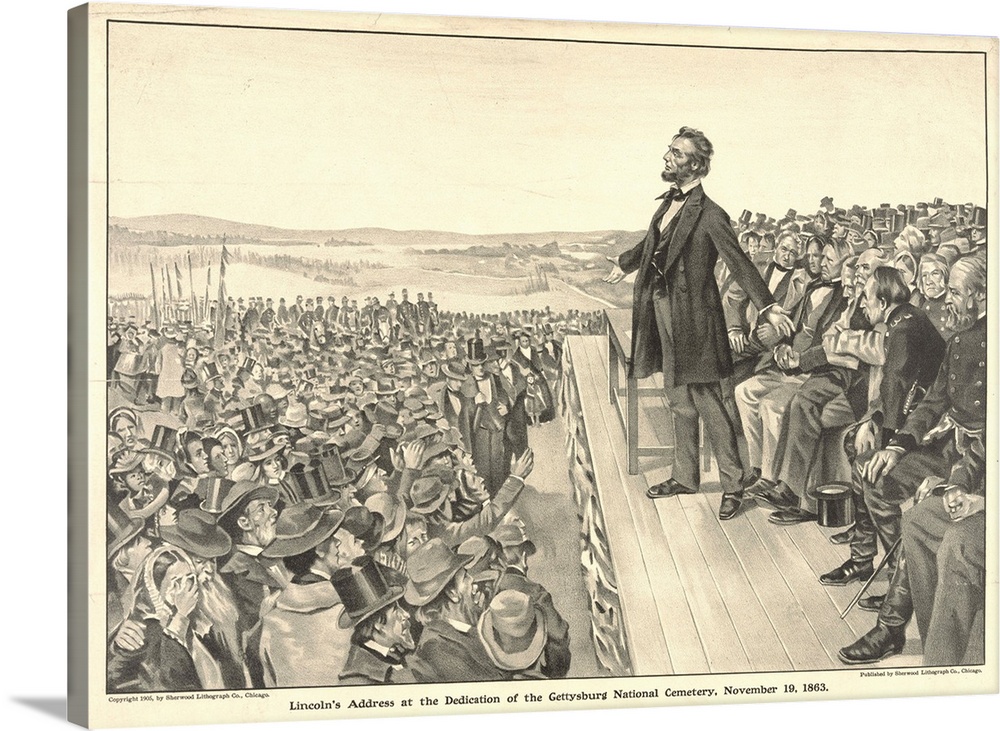
I’ve long been captivated by President Lincoln’s Gettysburg address, and recently, even more so. The stressors of our times outline the parallels of ‘now’ and ‘then’ in obvious similarities bringing us back often to the Constitution, the Declaration of Independence, and thus for me, to the Gettysburg Address. In fact, given a choice of inspirational writing, I’d choose the Address over the Declaration every time. In fact, I made copies of it years ago to keep near my writing desks in various locations. I know I’ve written before on this blog about the Address, but that was motivated by a recent ‘State of the Union’ speech running two hours and signifying nothing. But I’m back to Mr. Lincoln again in response to the growing criticism I hear of the values of our founding fathers.
Why do I feel the attachment to the Gettysburg Address so profoundly? Simple. Yes, initially it probably has roots in the fact that one branch of my family tree is deeply rooted in the Civil War and that has set up some connection in my DNA that lives with me still. However, I’ve often thought it’s more the captivating story of how the Address was written holding me hostage now. For the unaware, the marvel of Lincoln’s accomplishment lies in the fact that it was only two hundred words delivered in two minutes. He followed the most famous orator of the day, a former politician and President of Harvard College, Edward Everett, who gave a twenty-thousand word speech and spoke for two hours! Everett admitted in a letter to Lincoln after the ceremony dedicating Gettysburg as a national cemetery that Lincoln had done in two-hundred words what Everett couldn’t do in twenty-thousand. That has always seemed to me a profound lesson for a writer to learn, which is why I hold onto it so fast. Continue Reading